Knowing Your Place
Welcome to our town’s little wildlife area, a marsh surrounded by paths surrounded by subdivisions and neighborhoods. Once you enter, the occasional sound of barking dogs is the only clue that civilization is only a back deck away. And even the barking has to compete with the songs of red-winged blackbirds and the laughter of mallards echoing off the surface of the water.
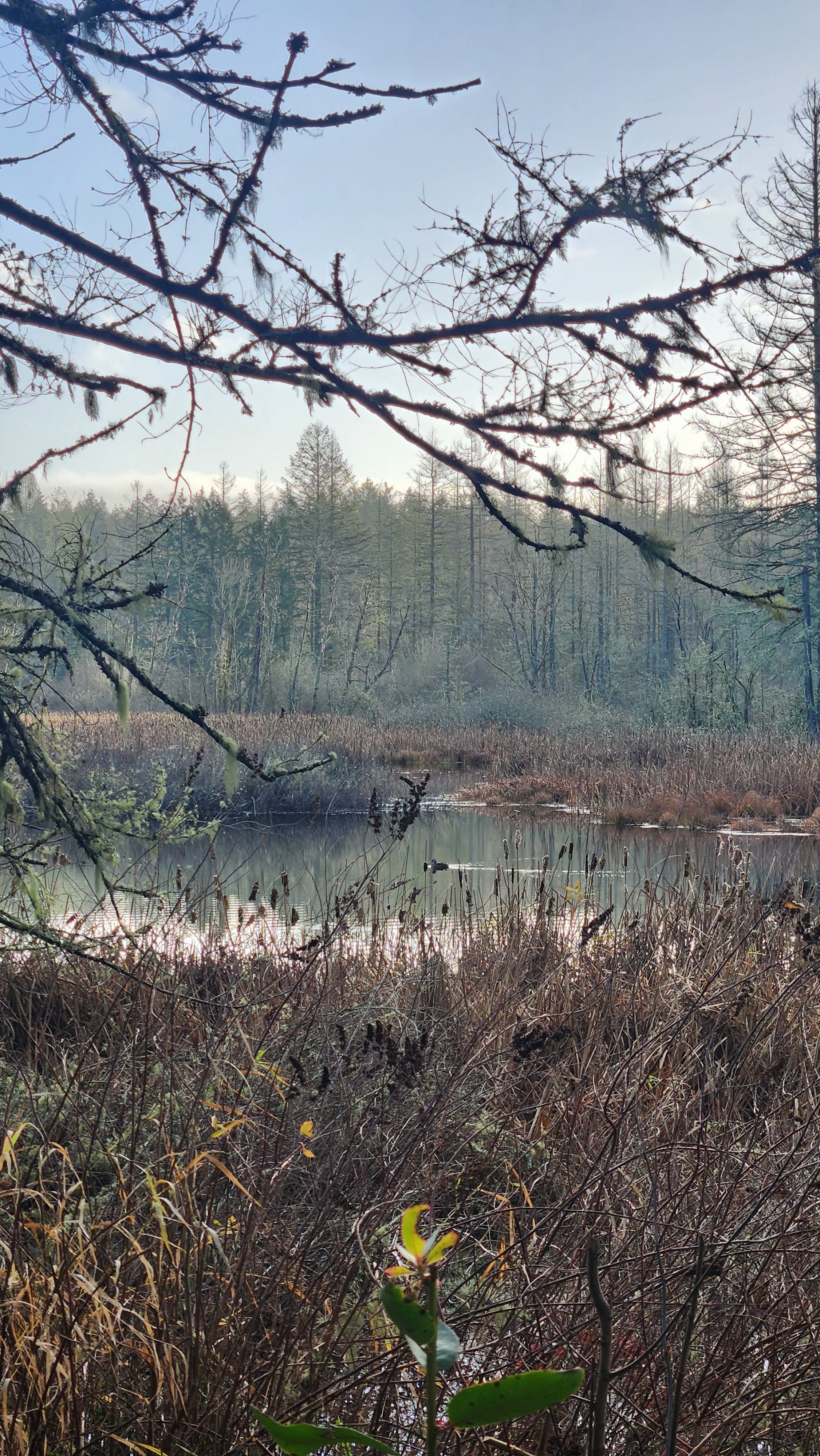
Our town loves this place and so does my family. All 5 of my kids have spent the last 12 years tromping these paths. This was partly intentional; we follow Charlotte Mason's method of education and she emphasizes the importance of children interacting with nature, and especially the nature in their place, in the early years, as just a few quotes from her volumes will show:
Children are born naturalists, with a bent inherited, perhaps, from an unknown ancestor; but every child has a natural interest in the living things about him which it is the business of his parents to encourage… Volume 1, p.58
Nature knowledge is most important for young children. It would be well if we all persons in authority, parents and all who act for parents, could make up our minds that there is no sort of knowledge to be got in these early years so valuable to children as that which they get for themselves of the world they live in. Let them once get touch with nature, and a habit is formed which will be a source of delight through life. Volume 1, p.61
Children should be made early intimate with the trees, too; should pick out half a dozen trees, oak, elm, ash, beech, in their winter nakedness, and take these to be their year-long friends. Volume 1, p. 52
It is infinitely well worth the mother’s while to take some pains every day to secure, in the first place, that her children spend hours daily amongst rural and natural objects; and in the second place, to infuse into them, or rather, to cherish in them, the love of investigation. Volume 1, p. 71
And my personal favorite:
“We are all meant to be naturalists, each in his own degree, and it is inexcusable to live in a world so full of the marvels of plant and animal life and to care for none of these things.” Volume 1, p.61
As I say, it was partly intentional, partly instinctive. I grew up in rural Wisconsin with a dad who was happiest when outdoors with us, so nature as a refuge was instinctive. As a kid, I often rode my bikes to local farmer’s pastures with a book and a sack lunch and spent hours reading in the tall grass. I love finding places in nature to walk and observe. When my kids were younger and we moved to this small town on the Puget Sound, these woods (only a 7 minute walk from our front door!) were where we went when we were having a hard day and attitudes needed adjustment (mine as much as theirs, sometimes more). It never failed to be the remedy we needed, no matter what the weather or season. If the day was going south and there were more tears with every hour, I would yell, “We’re going to the woods!” and they would fly into action. The older kids would grab coats and shoes; if we had a baby at the time, the Baby Bag was stuffed with essentials; the stroller was made ready; scooters or skateboards might make an appearance; I would stuff a backpack with carrots, apples, water, pencils and paper, anything we might need in order to stay in the woods for as long as it took to let it work on us. It was our refuge and retreat. I can say I did it to educate their sense of place or whatever, but honestly, it kept us all sane and happy.
The kids are older - some are Actual Adults now - but we still call it “our woods” because when you spend time with a place, a long time, simply enjoying and exploring it, walking the same paths over and over, it does become yours in a very real sense. It is woven into our individual memories and the collective memory as a family. We have seen it in all kinds of weather in every season. We have favorite haunts and have given our own names to parts of it we prefer. We know where to hunt for rough-skinned newts, where the coral fungi is most likely growing, where the mallards like to rest. We have gone to it in all kinds of moods, and it has always given us a place to run and shout and listen and exhale. We feel as if we know it - we do know it - and knowing it, we love it for itself as it is. I think of it as The Bombadil Effect. In Tolkien's Lord of the Rings, Tom Bombadil loves his place for itself and delights in the other-ness of its creatures and growing things. In one of his letters, Tolkien says about Bombadil that “If you have, as it were taken ‘a vow of poverty’, renounced control, and take delight in things for themselves without reference to yourself, watching, observing, and to some extent knowing, then the question of the rights and wrongs of power and control might become utterly meaningless to you, and the means of power quite valueless.”
In another letter, he writes: “I do not mean him to be an allegory -- or I should not have given him so particular, individual, and ridiculous a name -- but ‘allegory’ is the only model of exhibiting certain functions: he is then an ‘allegory’, or an exemplar, a particular embodying of pure (real) science: the spirit that desires knowledge of other things, their history and nature, because they are ‘other’ and wholly independent of an enquiring mind, a spirit coeval with the rational mind, and entirely unconcerned with ‘doing’ anything with the knowledge: Zoology and Botany not Cattle-breeding or Agriculture.” (emphasis Tolkien’s)
Time spent in places like this - and especially slow time, the time of years and years, not just visiting or passing through, though that is worthwhile for what it is - time spent in and with our places gives our perspectives of the World and Things In It a sort of straightening out. When we visited Yellowstone two summers ago, it was overwhelming and incredible. That is place worth visiting, even if you only go once in your lifetime. But what would it be like to live at the entrance of Yellowstone, in Gardner, MT say, and have the opportunity to get to know the place, to spend time with it and not just in it; to recognize the small corners and know them, not just the places that are spectacular? That would be something. Time spent enjoying the same wild places for years, even small pockets of wild enclosed like a walled garden by subdivisions and neighborhoods - time in these places reminds us that there is a world along side the one we have built and it has a life other than ours, though it is twined with ours more than we may realize. We hear the laughter of the mallard and and smile. We hear the songs of the red-winged blackbirds echoing and stand still, listening, maybe wishing we could understand the language of song and answer in kind. We hear the chorus of croaking frogs and behind that the steady barking of the neighborhood dogs, and slowly become aware that where we are right now is a pretty good place to be. Scripture speaks of the groaning of creation, but it also sings, and it’s good for us, good for our children, to find those places and learn to hear the songs.
The Marshes of Glynn


Glooms of the live-oaks, beautiful-braided and woven
With intricate shades of the vines that myriad-cloven
  Clamber the forks of the multiform boughs,--
                        Emerald twilights,--
                        Virginal shy lights,
Wrought of the leaves to allure to the whisper of vows,
When lovers pace timidly down through the green colonnades
Of the dim sweet woods, of the dear dark woods,
  Of the heavenly woods and glades,
That run to the radiant marginal sand-beach within
        The wide sea-marshes of Glynn;--
Beautiful glooms, soft dusks in the noon-day fire,--
Wildwood privacies, closets of lone desire,
Chamber from chamber parted with wavering arras of leaves,--
Cells for the passionate pleasure of prayer to the soul that grieves,
Pure with a sense of the passing of saints through the wood,
Cool for the dutiful weighing of ill with good;--
O braided dusks of the oak and woven shades of the vine,
While the riotous noon-day sun of the June-day long did shine
Ye held me fast in your heart and I held you fast in mine;
But now when the noon is no more, and riot is rest,
And the sun is a-wait at the ponderous gate of the West,
And the slant yellow beam down the wood-aisle doth seem
Like a lane into heaven that leads from a dream,--
Ay, now, when my soul all day hath drunken the soul of the oak,
And my heart is at ease from men, and the wearisome sound of the stroke
  Of the scythe of time and the trowel of trade is low,
  And belief overmasters doubt, and I know that I know,
  And my spirit is grown to a lordly great compass within,
That the length and the breadth and the sweep of the marshes of Glynn
Will work me no fear like the fear they have wrought me of yore
When length was fatigue, and when breadth was but bitterness sore,
And when terror and shrinking and dreary unnamable pain
Drew over me out of the merciless miles of the plain,--
Oh, now, unafraid, I am fain to face
  The vast sweet visage of space.
To the edge of the wood I am drawn, I am drawn,
Where the gray beach glimmering runs, as a belt of the dawn,
  For a mete and a mark
    To the forest-dark:--
                        So:
Affable live-oak, leaning low,--
Thus--with your favor--soft, with a reverent hand,
(Not lightly touching your person, Lord of the land!)
Bending your beauty aside, with a step I stand
On the firm-packed sand,
                        Free
By a world of marsh that borders a world of sea.
  Sinuous southward and sinuous northward the shimmering band
  Of the sand-beach fastens the fringe of the marsh to the folds of the land.
Inward and outward to northward and southward the beach-lines linger and curl
As a silver-wrought garment that clings to and follows
    the firm sweet limbs of a girl.
Vanishing, swerving, evermore curving again into sight,
Softly the sand-beach wavers away to a dim gray looping of light.
And what if behind me to westward the wall of the woods stands high?
The world lies east: how ample, the marsh and the sea and the sky!
A league and a league of marsh-grass, waist-high, broad in the blade,
Green, and all of a height, and unflecked with a light or a shade,
Stretch leisurely off, in a pleasant plain,
To the terminal blue of the main.
Oh, what is abroad in the marsh and the terminal sea?
  Somehow my soul seems suddenly free
From the weighing of fate and the sad discussion of sin,
By the length and the breadth and the sweep of the marshes of Glynn.
Ye marshes, how candid and simple and nothing-withholding and free
Ye publish yourselves to the sky and offer yourselves to the sea!
Tolerant plains, that suffer the sea and the rains and the sun,
Ye spread and span like the catholic man who hath mightily won
God out of knowledge and good out of infinite pain
And sight out of blindness and purity out of a stain.
As the marsh-hen secretly builds on the watery sod,
Behold I will build me a nest on the greatness of God:
I will fly in the greatness of God as the marsh-hen flies
In the freedom that fills all the space 'twixt the marsh and the skies:
By so many roots as the marsh-grass sends in the sod
I will heartily lay me a-hold on the greatness of God:
Oh, like to the greatness of God is the greatness within
The range of the marshes, the liberal marshes of Glynn.
And the sea lends large, as the marsh: lo, out of his plenty the sea
Pours fast: full soon the time of the flood-tide must be:
Look how the grace of the sea doth go
About and about through the intricate channels that flow
        Here and there,
                        Everywhere,
Till his waters have flooded the uttermost creeks and the low-lying lanes,
And the marsh is meshed with a million veins,
That like as with rosy and silvery essences flow
  In the rose-and-silver evening glow.
                        Farewell, my lord Sun!
The creeks overflow: a thousand rivulets run
'Twixt the roots of the sod; the blades of the marsh-grass stir;
Passeth a hurrying sound of wings that westward whirr;
Passeth, and all is still; and the currents cease to run;
And the sea and the marsh are one.
How still the plains of the waters be!
The tide is in his ecstasy.
The tide is at his highest height:
                        And it is night.
And now from the Vast of the Lord will the waters of sleep
Roll in on the souls of men,
But who will reveal to our waking ken
The forms that swim and the shapes that creep
                        Under the waters of sleep?
And I would I could know what swimmeth below when the tide comes in
On the length and the breadth of the marvellous marshes of Glynn.

Comments
Post a Comment