The Act of Recognition: Distinguishing Traits of the Cultivated Amateur - Humility and Self-Awareness
“A silent lover is one who doesn’t know his job. … There, then, is the role of the amateur: to look the world back to grace. …Indeed, the whole distinction between art and trash…depends on the presence or absence of the loving eye.”
“Because we have tended to think of leisure as occasional or preparatory, and leisure-time activities as merely filling up the cracks of a busy life, the creative arts, which are particularly the symbols of cultivation, have never reached their true educational proportions. I think that what is true of scholarship is also true of the creative arts: those who paint and write and compose are, again, producers. The process of liberal education seems to me to be concerned more with understanding and responding to the arts than with producing them, though, of course, this is a matter of emphasis not of definition. As Castiglione showed for the Renaissance courtier, the artist needs to be complemented by the cultivated amateur, who represents the social vision of an educated public that has some idea what to do with the artist’s work. Hence education in the arts is primarily critical: it struggles to attain a conscious knowledge and understanding of a kind that is normally detached from the creative process itself, though it should be as useful to the creative artist as to anyone else. The chief deficiency in today’s literature, for example, is not the lack of good writers, but the lack of a reading public sufficiently large, informed, and articulate to establish the real social importance of the good writer.”
Northrop Frye
When I read the above passage in a Northrop Frye essay, it immediately resonated with me. I tripled underlined this whole paragraph, and wrote, “YES!!!” in huge letters in the margins. In the phrase, “cultivated amateur” and its accompanying description, Frye had articulated exactly my own unarticulated reason for why I study the Arts: to become a member of an “educated public,” to become more and more someone “that has some idea what to do with the artist’s work.” It’s exactly what I hope for this space - to encourage you and me to continue learning about the Arts, to become better audiences for the Arts, because we understand that the Arts are not just a nice bonus to the good life, but a necessary part.1
If you’ve made it this far, I don’t have to convince you that the Arts are necessary. You no doubt feel that they are essential to a life well-lived. And this is because Art, like Nature, has a connection to the eternal and transcendent.(1) We know the work of art is more than the sum of its parts. It is more than oil paint and stretched canvas, or chiseled stone, or paper and ink. As John Milton said,
“For books are not absolutely dead things, but do contain a potency of life in them to be as active as that soul was whose progeny they are; nay, they do preserve as in a vial the purest efficacy and extraction of that living intellect that bred them.”
John Milton, Areopagitica
There is something in a true work of Art that makes it more than it is on its surface:
“Art is an attempt to transport into a limited quantity of matter, modeled by man, an image of the infinite beauty of the entire universe. If the attempt succeeds, this portion of matter should not hide the universe, but on the contrary, it should reveal its reality to all around.”
Simone Weil, Forms of the Implicit Love of God
When we meet a work of art, we are meeting something that contains “a potency of life,” something that is “an image of the infinite beauty of the entire universe.”
So how should we meet it?
That is the question this occasional series will think through. Years ago, I read a thin little book called The Distinguishing Traits of Christian Character by Gardiner Spring. The author wrote it to be a help for his readers to actually do what St. Paul says in 2 Corinthians: “Examine yourselves to see if you be in the faith,” and my goodness, it was a potent little volume. I’m not going to ask you to examine yourselves or anything like that. But I did think the title could be a helpful way to consider our approach to the Arts, to think about those traits that make for a good reader, a good receiver of Art. Things like Patience, Diligence, Manners (yes, I firmly believe that being polite to a work of Art is part of reading well), etc. Those will all be future pieces.
First, Humility
The first trait, which is foundational to all the others, is Humility, which is not actively thinking of yourself less, but not actively thinking of yourself much at all. The receiver of a work of Art should not be thinking about themselves when face to face with a work of Art. As a link to transcendent realities, the work should pull us out of ourselves, at least to some degree. Hopefully, the more we look at the work itself in an effort to actually see it, the more we will see it as it is in itself. The amateur is a lover, as the Capon quote says above, and a lover is not thinking about themselves when they are looking at their beloved, unless maybe it’s to think, “Who am I that this person should love me?” The question is rhetorical. The answer is unspoken but if it had to be put into words it would be something like, “Not worthy of so much goodness.” Or more simply, “Damn lucky.” Even in these answers, the eyes are directed back to the beloved.
Humility must be first. It is the soil that nourishes all the other flowers of disposition, the spring, the source. First and foremost, we look and see and notice and marvel. Everything else flows from that.
Self-Awareness
A branch of Humility is Self-Awareness. Amateur, know thyself. Know that you are
not a professional. You might be a professional artist in one area, but few artists are professionals in all the Arts. Whatever area in which you are not a professional, own that. Embrace your amateur-ness. You are called to be a lover, not a maker. Perhaps that will change one day. Maybe you will be called later in life to be an architect or a painter, but until that happens - or rather, even if that happens - our focus as amateurs should be on educating ourselves so that we can better receive the Arts.
This can be a difficult thing to embrace. We live in a culture that is manic about self-expression. We are self-expressing all over everyone everywhere all the time. It’s a sloppy mess out there, and it’s exhausting. I’m just as guilty as the next person, too. I wrote plenty of rubbish verse in an attempt to be A Poet. But after years of wishing it was otherwise, I’ve come to the place where I am happy to be an amateur, a literal lover, of the Arts. I have not been called to be among “those who paint and write and compose,” what Frye calls, “a producer.” Though I have dabbled in these things and I do dabble in these things - and I believe that dabbling is an important part of being a cultivated amateur; this Substack is me actively dabbling - it is not my calling or gifting in life to write poetry or paint or sculpt or compose music professionally, as much as I may want to. I’m called to be a receiver, an educated receiver, well-prepared to taken in the artist’s work and understand its place in the tradition and its value as Art.
This is not secondary busy work given to those who just aren’t good enough. This is necessary work. As Frye says, “The chief deficiency in today’s literature…is not the lack of good writers, but the lack of a reading public sufficiently large, informed, and articulate to establish the real social importance of the good writer.” We can’t all be artists. We can’t all write novels that will enter the canon of timeless, classic works. Even the movers and shakers of today - very many of them will be swept away and forgotten in a generation or two. “The process of liberal education seems to me to be concerned more with understanding and responding to the arts than with producing them,” Frye said. What is that process? Frye answers this in same paragraph:
Hence education in the arts is primarily critical: it struggles to attain a conscious knowledge and understanding of a kind that is normally detached from the creative process itself, though it should be as useful to the creative artist as to anyone else. (emphasis mine)
The next obvious question is, “What does he mean by ‘critical’?” In his essay On Value-Judgements, Frye writes,
“The fundamental critical act, I have said elsewhere, is the act of recognition, seeing what is there, as distinct from merely seeing a Narcissus mirror of our own experience and social and moral prejudice. …there is a boundary line which in the course of time inexorably separates interpreting from evaluating. When a critic interprets, he is talking about [the art]; when he evaluates, he is talking about himself, or, at most, about himself as a representative of his age.”
We are trained from our school days to respond to a work of Art by answering questions like, “How does that make you feel?” Or we are told what sort of messages the artist was trying to get across, what social issue he was addressing, or worse, what constructs of power he was operating under, and then we are asked to look at the art through that lens. As Frye points out above, these are not interpretations of the Art but evaluations, judgements of value, which always say more about the person judging than the work being judged. In the same essay (On Value-Judgements), Frye gives us an example of this wrong way to approach a work:
“Let us suppose than an evaluating critic of our own age goes to work on Dickens. He will discover that melodrama, sentimentality, and humor bulk very large in Dickens. He feels that a critic of our time can accept the humor, but that the melodrama and sentimentality are an embarrassment. He has to pretend that melodrama and sentimentality are not as important as they seem, or that Dickens has a vitality which carries him along in spite of them. He will also realize that his own age sets a high value on irony, and disapproves of coincidence or manipulated happy endings in plots and of exaggerated purity in characters. So he will bring out everything in Dickens, real or fancied, that is darkly and ambiguously ironic, or hostile to Victorian social standard, and the coincidences and the pure heroines and the rest of it will be passes over — in short, bowdlerized. To interpret Dickens is first of all to accept Dickens’s own terms as the conditions of the study: to evaluate Dickens is to set up our own terms, producing a hideous caricature of Dickens which soon becomes a most revealing and accurate caricature of ourselves and of the anxieties of [our time].”
Part of what makes the amateur’s work a difficult one is unlearning these bad habits and replacing them with good ones. It reminds me of John Milton’s famous quote on education:
“The end then of learning is to repair the ruins of our first parents by regaining to know God aright, and out of that knowledge to love him, to imitate him, to be like him, as we may the nearest by possessing our souls of true virtue, which being united to the heavenly grace of faith makes up the highest perfection.”
It’s not just “the ruins of our first parents” we are repairing, but that of our modern, utilitarian education. As Frye says, “We have tended to think of leisure as occasional or preparatory, and leisure-time activities as merely filling up the cracks of a busy life.” Nice if you can get them, but not necessary. This is a recurring hurdle to heave ourselves over. The arts don’t need to have a “practical use” to have value. And they don’t have to “speak about an issue” for them to communicate to us. The Arts are always showing forth, but it is only the one who comes in an attitude of humility and self-awareness who will see what the work of Art shows us.
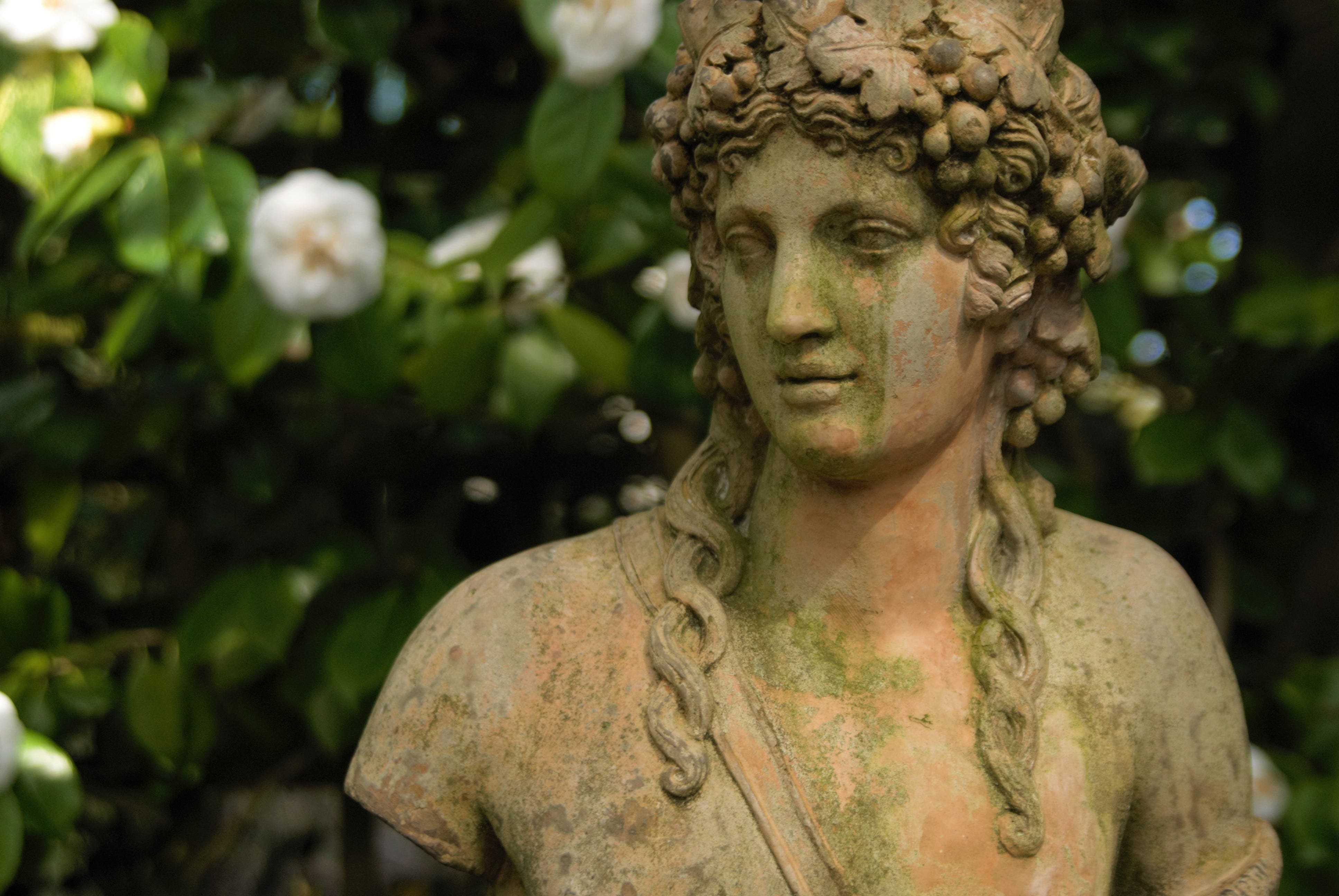
there is a most important sense in which poems are as silent as statues.
Regarding Nature: Romans 1:19-20, Psalm 19:1-6, all the parables of Christ, Matthew 6:25ff
Regarding Art: Exodus 25-30 and 35-40, especially note 28:2 and 35:30-35 - the fact that God gave specific artists specific instructions for definite works of Art as part of his temple, and that he wanted the priests to be dressed in “holy garments…for glory and for beauty,” shows that these things have a potential to connect us to or increase our experience of transcendent eternal realities. Worshipping God in a Walmart-esque warehouse structure is a different experience from worshipping Him in a cathedral built to guide every one of your senses toward that which is beyond them. In His mercy, He meets us when we worship no matter where we are gathered, but that doesn’t mean we aren’t missing out on something.


Comments
Post a Comment